• Link to X
  • Link to Facebook
  • Link to Youtube
  • Link to Mail
UCLA Center for Neighborhood Knowledge
  • Home
  • About
    • Team
    • Contact
  • News
  • Maps
    • California COVID-19 Maps
      • CA COVID-19 Medical Vulnerability
      • CA COVID-19 Owner Vulnerability
      • CA COVID-19 Renter Vulnerability
    • Los Angeles COVID-19 Maps
      • Los Angeles Vulnerability
      • Los Angeles County COVID-19 Medical Vulnerability
    • CA Transportation Disparities Mapping Tool
    • South LA Decides: Children Data and Mapping Portal
    • Lens: HIV Prevalence and COVID-19 Vulnerabilities
      • Lens 1.0: HIV Prevalence and COVID-19 Vulnerabilities
      • Lens 2.0: HIV Prevalence and COVID-19 Vulnerabilities
    • Bulldozing Asian Communities: Freeway Construction and Urban Renewal in Stockton
  • Research
    • Current Projects
    • COVID-19
      • COVID Publications
    • Publications
  • Immigration
  • LA Wildfires
  • Menu Menu
Blog - Latest News
https://www.flickr.com/photos/29456235@N04/

L.A.’s COVID-19 Economic Crisis: Renter Vulnerability Index

May 6, 2020/1 Comment/in Publications/by Silvia R. González

Los Angeles County has nearly two-thirds of a million residents living in low-income renter households that are one paycheck away from being unable to cover their monthly housing cost. The workers in these households are at high risk of losing their jobs because of the COVID-19 crisis, placing them and their family in imminent danger of homelessness.

Our new study featured in the UCLA Ziman Center for Real Estate Economic Newsletter, provides information to public agencies and community organizations to help them better identify neighborhoods with a high concentration of vulnerable renters, to understand the neighborhoods’ socioeconomic and demographic characteristics, and to design outreach programs that address the specific challenges in each place.

Specifically, this study utilizes three dimensions to identify vulnerable neighborhoods with:
(1) A disproportionate large number of renters on the edge of financial vulnerability due to high housing cost burden;
(2) A disproportionate large number of workers vulnerable to job displacement due to retail and service-sector closures; and
(3) A disproportionate number of people excluded from the federal Coronavirus Aid, Relief and Economic Security Act, known as the CARES Act.

Some of the most vulnerable neighborhoods are concentrated in South and Central Los Angeles, including areas near downtown such as MacArthur Park, Pico-Union, Harvard Heights, Koreatown, Hollywood and East Hollywood, and Boyle Heights. There are pockets of vulnerability in San Fernando Valley (e.g., Van Nuys) and central Long Beach.

We thank the Howard and Irene Levine Program in Housing and Social Responsibility at the UCLA Ziman Center for Real Estate for partially funding this research. Additional support was provided by the Center for Neighborhood Knowledge, Ong & Associates, and the UCLA Latino Policy and Politics Initiative.

If you are facing an eviction, visit the LA County Business and Consumer Affairs.

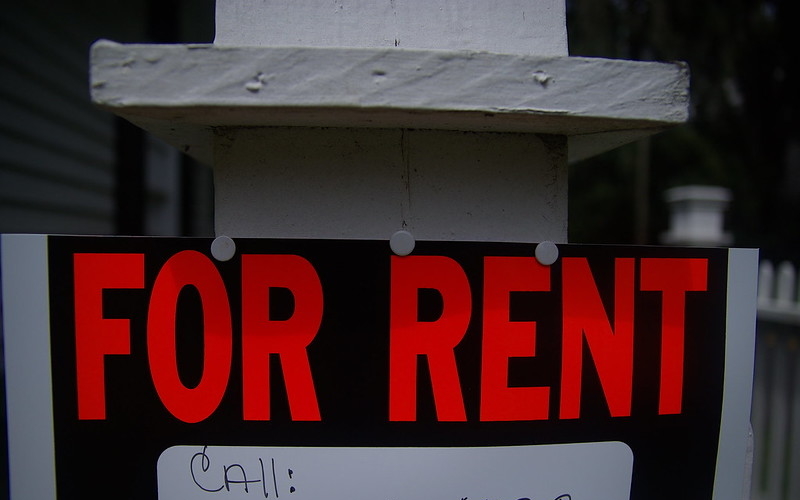
Image Charlestons TheDigitel (cc)

Download > Economic Impacts of the COVID-19 Crisis in Los Angeles: Identifying Renter-Vulnerable Neighborhoods

Tags: COVID Publication, covid19, los angeles, renters
Share this entry
  • Share on Facebook
  • Share on X
  • Share on LinkedIn
  • Share by Mail
https://knowledge.luskin.ucla.edu/wp-content/uploads/2020/05/for-Rent-e1588901902221.jpg 500 800 Silvia R. González https://knowledge.luskin.ucla.edu/wp-content/uploads/2020/04/Uxd_Blk_CNK_Luskin_E.png Silvia R. González2020-05-06 18:39:512020-11-10 00:58:55L.A.’s COVID-19 Economic Crisis: Renter Vulnerability Index
You might also like
CNK Research Finds Census Inequity in L.A. County
UCLA Economic Letter for September 2020
‘Overlooked’: Asian American Jobless Rate Surges But Few Take Notice
Using the Homeless to Guard Empty Houses
New Interactive COVID-19 Impacts Maps and Data
Latino city in Arizona grew, but census says it shrank
COVID-19 Impacts on Minority Businesses and Systemic Inequality
Evaluating 2020 Census Data for L.A. County by Comparing Parcel-Based Housing Counts
1 reply
  1. CA
    CA says:
    May 11, 2020 at 11:24 pm

    Great report!!! It would be helpful to have the data broken down by County Supervisoral Districts and split between Incorporated and Unincorporated numbers of residents affected so community organizations can determine which areas each can cover for outreach and education, per the recommendations. 🙂

    Reply

Leave a Reply

Want to join the discussion?
Feel free to contribute!

Leave a Reply Cancel reply

Your email address will not be published. Required fields are marked *

Pages

  • About
  • Bulldozing Asian Communities: Freeway Construction and Urban Renewal in Stockton
  • CA COVID-19 Medical Vulnerability
  • CA COVID-19 Owner Vulnerability
  • CA COVID-19 Renter Vulnerability
  • CA Transportation Disparities Mapping Tool
  • California Maps
  • Contact
  • COVID Publications
  • COVID-19 Equity Research Initiative
  • Current Projects
  • Director Paul M. Ong
  • Home
  • Immigration
  • LA Wildfires
  • Los Angeles County COVID-19 Medical Vulnerability
  • Los Angeles Vulnerability
  • Maps
  • News
  • Publications
  • Sitemap
  • South LA Decides: Children Data and Mapping Portal
  • Team
  • The Lens 2.0: HIV Prevalence and COVID-19 Vulnerabilities

Categories

  • Events
  • LA Wildfires Data Briefs
  • News
  • Ong
  • Publications
  • Uncategorized

Archive

  • April 2026
  • September 2025
  • July 2025
  • March 2025
  • February 2025
  • January 2025
  • September 2024
  • December 2023
  • November 2023
  • September 2023
  • February 2023
  • May 2022
  • April 2022
  • March 2022
  • February 2022
  • January 2022
  • December 2021
  • November 2021
  • October 2021
  • September 2021
  • August 2021
  • July 2021
  • June 2021
  • May 2021
  • April 2021
  • March 2021
  • February 2021
  • January 2021
  • December 2020
  • November 2020
  • October 2020
  • September 2020
  • August 2020
  • July 2020
  • June 2020
  • May 2020
  • April 2020
  • March 2020
  • December 2019
  • October 2019
  • June 2019
  • May 2019
  • February 2019
  • July 2018
  • June 2018
  • March 2018
  • February 2018
© Copyright - UCLA Center for Neighborhood Knowledge - Login - Enfold WordPress Theme by Kriesi
Link to: Participation in 2020 U.S. Census Is Falling Behind Link to: Participation in 2020 U.S. Census Is Falling Behind Participation in 2020 U.S. Census Is Falling Behind Link to: Los Angeles County 2020 Census Response Rate Falling Behind Link to: Los Angeles County 2020 Census Response Rate Falling Behind https://census.lacounty.gov/census/Los Angeles County 2020 Census Response Rate Falling Behind
Scroll to top Scroll to top Scroll to top