• Link to X
  • Link to Facebook
  • Link to Youtube
  • Link to Mail
UCLA Center for Neighborhood Knowledge
  • Home
  • About
    • Team
    • Contact
  • News
  • Maps
    • California COVID-19 Maps
      • CA COVID-19 Medical Vulnerability
      • CA COVID-19 Owner Vulnerability
      • CA COVID-19 Renter Vulnerability
    • Los Angeles COVID-19 Maps
      • Los Angeles Vulnerability
      • Los Angeles County COVID-19 Medical Vulnerability
    • CA Transportation Disparities Mapping Tool
    • South LA Decides: Children Data and Mapping Portal
    • Lens: HIV Prevalence and COVID-19 Vulnerabilities
      • Lens 1.0: HIV Prevalence and COVID-19 Vulnerabilities
      • Lens 2.0: HIV Prevalence and COVID-19 Vulnerabilities
    • Bulldozing Asian Communities: Freeway Construction and Urban Renewal in Stockton
  • Research
    • Current Projects
    • COVID-19
      • COVID Publications
    • Publications
  • Immigration
  • LA Wildfires
  • Menu Menu
Blog - Latest News

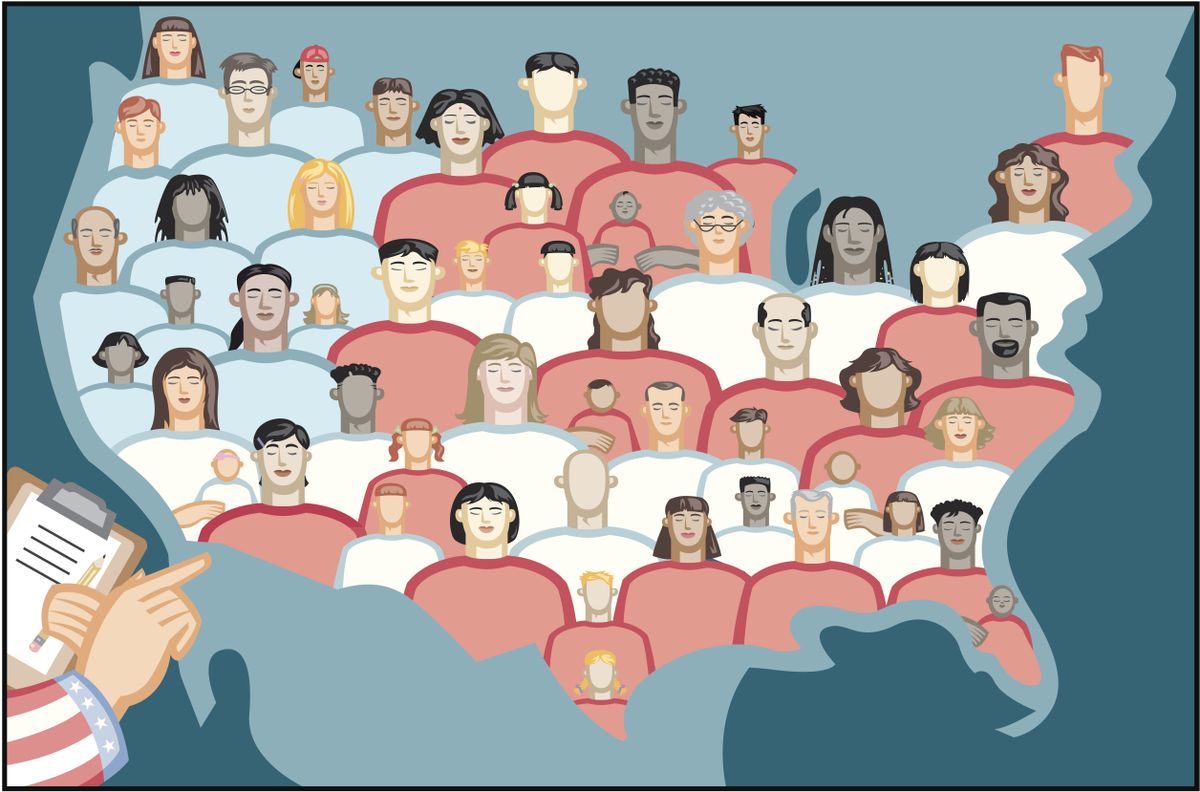
Participation in 2020 U.S. Census Is Falling Behind

April 30, 2020/0 Comments/in Publications/by Silvia R. González

New analysis shows the current rate of response is at least 11 percentage points lower than in 2010

The national response rate to the U.S. Census is lagging well behind where it was at a similar point a decade ago, according to an analysis spearheaded by Paul Ong, research professor and director of the UCLA Center for Neighborhood Knowledge.

Ong said shutdown orders related to the novel coronavirus pandemic seem to be a factor in suppressing the response rate at least 11 percentage points when the 2020 census through late April is compared to the same point in 2010.

The UCLA researchers noted that the self-response phase of the U.S. Census actually began March 12, which happened to coincide with mandated restrictions on gatherings and physical movements. “April 1 was designated as Census Day in an effort to highlight the importance of a complete and accurate count of American citizens,” said Ong, who has served as an advisor to the U.S. Census Bureau as part of his scholarly activities at the UCLA Luskin School of Public Affairs. “But that designation proved to be ceremonial at best, drawing little media notice or public attention with the vast majority of Americans hunkered down at home as a result of the shelter-in-place strategy.”

Ong said his findings are worrisome, seeming at odds with a positive message coming from the Census Bureau. An email blast sent in late April, for example, declared “an important milestone in the 2020 Census. More than half of all the households in the country have responded – that’s 77,500,000 households so far!”

Unless steps are taken immediately to boost response rates, Ong is worried that the 2020 U.S. Census is experiencing “a real and present danger of having one of the most incomplete census enumerations in history.”

Based on historical precedent, the CNK analysis predicts that an undercount would disproportionately affect low-income residents, people of color and immigrants.

“The Census Bureau is not to be blamed for the dire circumstances that have upended everyone’s life,” Ong said. “What is required now, however, is mobilizing community organizations and groups to work collaboratively with public agencies to minimize the damage. We need to focus scarce resources to do everything in our power to ensure inclusion in the census of society’s most marginalized people and neighborhoods.”

Find the report here.

Complete the census by October 31 online here

Image: iStock.com/RussellCreative

Tags: census2020, COVID Publication, covid19, inequality, nation
Share this entry
  • Share on Facebook
  • Share on X
  • Share on LinkedIn
  • Share by Mail
https://knowledge.luskin.ucla.edu/wp-content/uploads/2020/04/census.jpg 792 1200 Silvia R. González https://knowledge.luskin.ucla.edu/wp-content/uploads/2020/04/Uxd_Blk_CNK_Luskin_E.png Silvia R. González2020-04-30 12:00:402020-11-10 01:00:30Participation in 2020 U.S. Census Is Falling Behind
You might also like
Photo attributed to Kevitivity. Incorporated here under a Creative Commons Attribution 2.0 Generic License. No endorsement by licensor implied. Vulnerability Indicators and At-Risk Smaller Populations in California and Los Angeles: American Indians, Pacific Islanders, and Select Asian Ethnic Groups
Webinar – Confronting COVID-19: The Toll of the Virus on LA’s Most Vulnerable Communities
https://www.flickr.com/photos/29456235@N04/ L.A.’s COVID-19 Economic Crisis: Renter Vulnerability Index
Systemic Racial Inequality and the COVID-19 Homeowner Crisis
The Next Disaster under COVID-19: Mass Evictions and Homelessness in Los Angeles
White House adds new initiative for Asian American, Pacific Islander and Native Hawaiian visibility
UCLA provides timely research on how COVID-19 affects vulnerable communities
Joel Sheldon, owner of Vroman’s Bookstore, worries that his Pasadena store may not make it through the year because of the economic devastation caused by the COVID-19 pandemic. (Myung J. Chun / Los Angeles Times) The Los Angeles we love is dying in 2020. We must fight to save it
0 replies

Leave a Reply

Want to join the discussion?
Feel free to contribute!

Leave a Reply Cancel reply

Your email address will not be published. Required fields are marked *

Pages

  • About
  • Bulldozing Asian Communities: Freeway Construction and Urban Renewal in Stockton
  • CA COVID-19 Medical Vulnerability
  • CA COVID-19 Owner Vulnerability
  • CA COVID-19 Renter Vulnerability
  • CA Transportation Disparities Mapping Tool
  • California Maps
  • Contact
  • COVID Publications
  • COVID-19 Equity Research Initiative
  • Current Projects
  • Director Paul M. Ong
  • Home
  • Immigration
  • LA Wildfires
  • Los Angeles County COVID-19 Medical Vulnerability
  • Los Angeles Vulnerability
  • Maps
  • News
  • Publications
  • Sitemap
  • South LA Decides: Children Data and Mapping Portal
  • Team
  • The Lens 2.0: HIV Prevalence and COVID-19 Vulnerabilities

Categories

  • Events
  • LA Wildfires Data Briefs
  • News
  • Ong
  • Publications
  • Uncategorized

Archive

  • April 2026
  • September 2025
  • July 2025
  • March 2025
  • February 2025
  • January 2025
  • September 2024
  • December 2023
  • November 2023
  • September 2023
  • February 2023
  • May 2022
  • April 2022
  • March 2022
  • February 2022
  • January 2022
  • December 2021
  • November 2021
  • October 2021
  • September 2021
  • August 2021
  • July 2021
  • June 2021
  • May 2021
  • April 2021
  • March 2021
  • February 2021
  • January 2021
  • December 2020
  • November 2020
  • October 2020
  • September 2020
  • August 2020
  • July 2020
  • June 2020
  • May 2020
  • April 2020
  • March 2020
  • December 2019
  • October 2019
  • June 2019
  • May 2019
  • February 2019
  • July 2018
  • June 2018
  • March 2018
  • February 2018
© Copyright - UCLA Center for Neighborhood Knowledge - Login - Enfold WordPress Theme by Kriesi
Link to: Economic Impacts of the COVID-19 Crisis in Orange County Link to: Economic Impacts of the COVID-19 Crisis in Orange County Economic Impacts of the COVID-19 Crisis in Orange County Link to: L.A.’s COVID-19 Economic Crisis: Renter Vulnerability Index Link to: L.A.’s COVID-19 Economic Crisis: Renter Vulnerability Index https://www.flickr.com/photos/29456235@N04/L.A.’s COVID-19 Economic Crisis: Renter Vulnerability Index
Scroll to top Scroll to top Scroll to top