

Report shows impact of COVID-19 on Asian American labor force
Increasing difference in unemployment, jobless rates between Asians and whites among the findings
Released on July 22, 2020, our new report unveils the disparate economic effects the COVID-19 pandemic has had on Asian Americans, pointing to a critical need in expanding financial relief for all workers to counter the worsening effects of the crisis and strengthen recovery efforts.
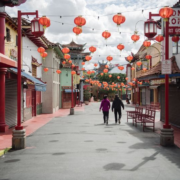
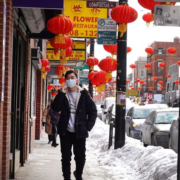
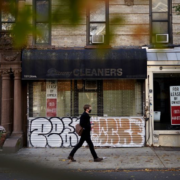
In particular, those Asian American businesses found in urban ethnic enclaves have been found to be more deeply affected than others, as anecdotal evidence reveals the extent to which xenophobia and racial discrimination has impacted these businesses. However, there has been little empirical data to demonstrate the overall effect on the Asian American labor market.
The new analysis, in collaboration with researchers from the UCLA Asian American Studies Center and Ong & Associates, used employment and labor data for California and New York to better understand the nature, pattern and magnitude of the COVID-19 economic disruption to Asian Americans between March and May 2020.
Our report found an increased difference in unemployment and joblessness between Asian Americans and whites during this period, compared with the period before the pandemic, when the rates were nearly identical. By May 2020, the researchers found, the unemployment rate for Asians was 15% and the jobless rate was 21%, compared with 12% and 16% for whites.
In addition, while Asian Americans made up 16% of the California labor force in February 2020, they filed 19% of initial unemployment claims over the two-and-a-half months of the shutdown. In New York state, they accounted for 9% of the labor force but filed 14% of claims by mid-April.
COVID-19 has a striking impact on disadvantaged Asian Americans, researchers Donald Mar and Paul Ong note. Among those in the labor force with a high school education or less, 83% filed unemployment claims in California, compared with 37% for the rest of the California labor force with the same level of education.
According to the report, many of these economic effects of COVID-19 are due to the fact that Asian Americans are heavily concentrated in a small number of states and frequently work in industries have been particularly hard hit by the pandemic and shelter-in-place mandates.
Nearly 1 in 4 employed Asian Americans work in the categories of hospitality and leisure, retail, and other services, the last of which includes businesses like repair shops and personal services such as hair-cutting and laundries. The unemployment rate for Asian Americans in the hospitality and leisure sector in April was 39%, compared with 36% for non-Hispanic whites. In the other services sector, the rate was 40% for Asians and 19% for whites, according to our analysis.
In terms of businesses closures during the pandemic, the authors estimate that 233,000 Asian American small businesses closed from February to April, representing a decline of 28% over the two-month period. The 1.79 million non-Hispanic white small businesses that closed over the same period represented a decline of 17%.
“An important question to consider for the future is whether these disparities will continue as the economy reopens and be exacerbated by the apparent increase in anti-Asian sentiment in the U.S.,” said Paul Ong, CNK director and co-author of the report.
A number of policy recommendations outlined in the report would provide much-needed economic relief to marginalized and low-income Asian Americans, in particular those in the service sector. They include:
- Enact federal policy to extend unemployment benefits and small business assistance, such as the Paycheck Protection Program and the Economic Injury Disaster Loan assistance program from the U.S. Small Business Administration.
- Enact additional state policies that provide benefits to marginalized populations least likely to receive unemployment benefits through the CARES Act.
- Enact additional policies to assist small businesses, including the so-called resiliency funds established by some local governments.
- Increase efforts to ensure marginalized populations take advantage of governmental, private and philanthropic resources to help people weather the financial hardships of COVID-19.
- Enact federal and state polices and fund programs to equip economically displaced people with job skills that are marketable during and after the COVID-19 crisis.
“We need to invest in all workers to ensure a robust recovery,” the researchers write.
The Center for Neighborhood Knowledge (CNK) conducts basic and applied research on the socioeconomic formation and internal dynamics of neighborhoods, and how these collective spatial units are positioned and embedded within regions. We work with a broad set of data to examine neighborhood phenomena across time and space. It is our hope that they might act as tools for community members, leaders, and organizations to inform and empower. The center is housed in the UCLA Luskin School of Public Affairs.
Established in 1969, the UCLA Asian American Studies Center has been at the forefront of producing and disseminating knowledge of the lives of Asian Americans and Pacific Islanders through research, archival and film documentation, publications and civic engagement. AASC is a national research center advancing historical, transformative and interdisciplinary scholarship by bridging research with community voices.
Ong & Associates is an economic and policy analysis consulting firm founded by Paul Ong that specializes in public interest issues; the firm provided services pro bono for the study.
Download the full report here >>> COVID-19’s Employment Disruptions to Asian Americans, by Donald Mar and Paul Ong, July 20, 2020
Media Contact
Melany De La Cruz-Viesca
E: melanyd@ucla.edu
P: 310-825-2974





Leave a Reply
Want to join the discussion?Feel free to contribute!