• Link to X
  • Link to Facebook
  • Link to Youtube
  • Link to Mail
UCLA Center for Neighborhood Knowledge
  • Home
  • About
    • Team
    • Contact
  • News
  • Maps
    • California COVID-19 Maps
      • CA COVID-19 Medical Vulnerability
      • CA COVID-19 Owner Vulnerability
      • CA COVID-19 Renter Vulnerability
    • Los Angeles COVID-19 Maps
      • Los Angeles Vulnerability
      • Los Angeles County COVID-19 Medical Vulnerability
    • CA Transportation Disparities Mapping Tool
    • South LA Decides: Children Data and Mapping Portal
    • Lens: HIV Prevalence and COVID-19 Vulnerabilities
      • Lens 1.0: HIV Prevalence and COVID-19 Vulnerabilities
      • Lens 2.0: HIV Prevalence and COVID-19 Vulnerabilities
    • Bulldozing Asian Communities: Freeway Construction and Urban Renewal in Stockton
  • Research
    • Current Projects
    • COVID-19
      • COVID Publications
    • Publications
  • Immigration
  • LA Wildfires
  • Menu Menu
Blog - Latest News

Impact of coronavirus pandemic on U.S. Census 2020

August 5, 2020/0 Comments/in News/by CNK Staff

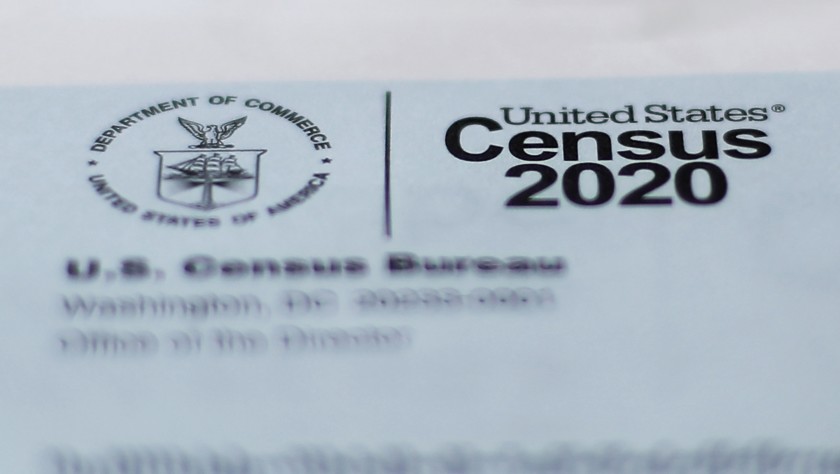
UCLA Center for Neighborhood Knowledge was recently featured in a LA Times article discussing the difficulties caused by the coronavirus pandemic for census workers in canvassing and reaching out to the most vulnerable communities. The article reveals that the pandemic is impacting everyone’s responses to the census and in particular those from affluent areas, not just hard-to-count neighborhoods. While California’s self-response rate is above the national average, the state ranks 22nd among all U.S. states in responding to the census.

Those figures belie another problem with census replies, said CNK director Paul Ong: the high chance of a “differential undercount,” in which one group is less likely to be included than another group.

“Historically, this has included low-income households, people of color, Indigenous individuals, and immigrants. There are enormous political and economic implications from a racially biased census count,” Ong said.

“Marginalized populations will be further disenfranchised and disproportionately left out for public funds and services.”

It’s “certainly true” that some wealthier areas are not responding at their typical rates, Ong said, adding that he doesn’t discount the issue. But to him, that’s not the biggest problem.

“If we have to put in more resources in the last few months of the count, that is not my priority. It’s more important to get the hard-to-count communities, because they are the ones on average really left behind.”

For more details, access the article here >>> Census workers are trying to reach more poor Californians and people of color. But the coronavirus could make the wealthy harder to find

Tags: census, census2020, covid19, los angeles, neighborhoods
Share this entry
  • Share on Facebook
  • Share on X
  • Share on LinkedIn
  • Share by Mail
https://knowledge.luskin.ucla.edu/wp-content/uploads/2020/08/90.jpeg 474 840 CNK Staff https://knowledge.luskin.ucla.edu/wp-content/uploads/2020/04/Uxd_Blk_CNK_Luskin_E.png CNK Staff2020-08-05 16:05:272020-08-10 21:53:00Impact of coronavirus pandemic on U.S. Census 2020
You might also like
COVID-19 and LA’s At-Risk Workers
‘Overlooked’: Asian American Jobless Rate Surges But Few Take Notice
Using the Homeless to Guard Empty Houses
Assessing Vulnerability Indicators and Race/Ethnicity
Report: Schools should look for long-term solutions to digital divide
#AntiRacistLA
A Los Angeles Mall Gets Snarled in Charged Debate Over Local Ownership
UCLA Economic Letter for September 2020
0 replies

Leave a Reply

Want to join the discussion?
Feel free to contribute!

Leave a Reply Cancel reply

Your email address will not be published. Required fields are marked *

Pages

  • About
  • Bulldozing Asian Communities: Freeway Construction and Urban Renewal in Stockton
  • CA COVID-19 Medical Vulnerability
  • CA COVID-19 Owner Vulnerability
  • CA COVID-19 Renter Vulnerability
  • CA Transportation Disparities Mapping Tool
  • California Maps
  • Contact
  • COVID Publications
  • COVID-19 Equity Research Initiative
  • Current Projects
  • Director Paul M. Ong
  • Home
  • Immigration
  • LA Wildfires
  • Los Angeles County COVID-19 Medical Vulnerability
  • Los Angeles Vulnerability
  • Maps
  • News
  • Publications
  • Sitemap
  • South LA Decides: Children Data and Mapping Portal
  • Team
  • The Lens 2.0: HIV Prevalence and COVID-19 Vulnerabilities

Categories

  • Events
  • LA Wildfires Data Briefs
  • News
  • Ong
  • Publications
  • Uncategorized

Archive

  • April 2026
  • September 2025
  • July 2025
  • March 2025
  • February 2025
  • January 2025
  • September 2024
  • December 2023
  • November 2023
  • September 2023
  • February 2023
  • May 2022
  • April 2022
  • March 2022
  • February 2022
  • January 2022
  • December 2021
  • November 2021
  • October 2021
  • September 2021
  • August 2021
  • July 2021
  • June 2021
  • May 2021
  • April 2021
  • March 2021
  • February 2021
  • January 2021
  • December 2020
  • November 2020
  • October 2020
  • September 2020
  • August 2020
  • July 2020
  • June 2020
  • May 2020
  • April 2020
  • March 2020
  • December 2019
  • October 2019
  • June 2019
  • May 2019
  • February 2019
  • July 2018
  • June 2018
  • March 2018
  • February 2018
© Copyright - UCLA Center for Neighborhood Knowledge - Login - Enfold WordPress Theme by Kriesi
Link to: Asian Americans face dual challenges: Surging unemployment and racism Link to: Asian Americans face dual challenges: Surging unemployment and racism Asian Americans face dual challenges: Surging unemployment and racism Link to: #AntiRacistLA Link to: #AntiRacistLA #AntiRacistLA
Scroll to top Scroll to top Scroll to top