• Link to X
  • Link to Facebook
  • Link to Youtube
  • Link to Mail
UCLA Center for Neighborhood Knowledge
  • Home
  • About
    • Team
    • Contact
  • News
  • Maps
    • California COVID-19 Maps
      • CA COVID-19 Medical Vulnerability
      • CA COVID-19 Owner Vulnerability
      • CA COVID-19 Renter Vulnerability
    • Los Angeles COVID-19 Maps
      • Los Angeles Vulnerability
      • Los Angeles County COVID-19 Medical Vulnerability
    • CA Transportation Disparities Mapping Tool
    • South LA Decides: Children Data and Mapping Portal
    • Lens: HIV Prevalence and COVID-19 Vulnerabilities
      • Lens 1.0: HIV Prevalence and COVID-19 Vulnerabilities
      • Lens 2.0: HIV Prevalence and COVID-19 Vulnerabilities
    • Bulldozing Asian Communities: Freeway Construction and Urban Renewal in Stockton
  • Research
    • Current Projects
    • COVID-19
      • COVID Publications
    • Publications
  • Immigration
  • LA Wildfires
  • Menu Menu
Blog - Latest News

Inequality and COVID-19 Job Displacement

September 9, 2020/0 Comments/in Publications/by CNK Staff

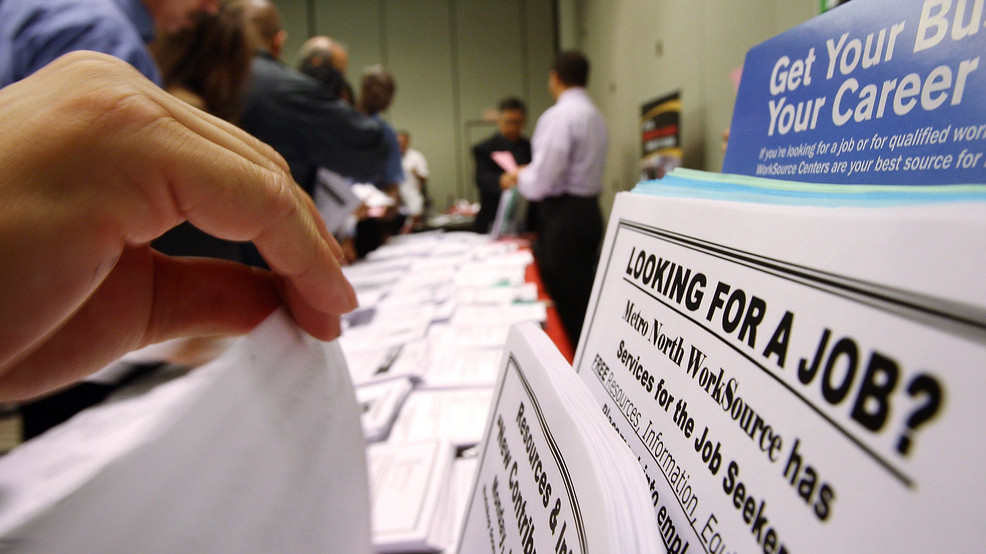
In collaboration with Ong & Associates, a new CNK report released today reveaks how the coronavirus pandemic has illuminated racial and socioeconomic disparities in the ongoing economic crisis and subsequent job displacements. This research brief, utilizing data from the U.S. Census Household Pulse Survey, examines racial and social inequality in job displacement resulting from COVID-19 and inability to collect unemployment-insurance benefits.

Minority groups, lower income and less educated workers, and the youngest worker are most severely affected. Major findings include:

  1. Although Black and Latinx workers are both more adversely affected for the pandemic, Latinx workers are highly impacted. Latinx workers account for 1 out of 4 displaced workers without UI benefits although they are only 1 out of the 6 employed workers.
  2. Displaced low income workers from households earning less than $25,000 per year are 31% of the displaced workers without UI, yet they are only 10.6% of the employed workers.
  3. Workers with and without a high school education comprise almost half of all displaced workers who do not receive UI although they represent only a third of employed workers.
  4. Younger workers are more likely to be displaced. 30% of all displaced workers without UI are between the ages of 18 and 30 compared to being 22% of the employed.

Access the full article here >>> Inequality and COVID-19 Job Displacement 

CNK would like to graciously acknowledge the partial support provided by the University of California Office of the President through a mini-grant (CBCRP Grant #R00RG2606) to support CNK’s COVID-19 Equity Research, as well as express gratitude for Megan Potter’s contributions and Chhandara Pech and Silvia R. González, key CNK research members.

Tags: COVID Publication, covid19, inequality, jobs, labor, minority, unemployment
Share this entry
  • Share on Facebook
  • Share on X
  • Share on LinkedIn
  • Share by Mail
https://knowledge.luskin.ucla.edu/wp-content/uploads/2020/09/image-1.jpeg 554 986 CNK Staff https://knowledge.luskin.ucla.edu/wp-content/uploads/2020/04/Uxd_Blk_CNK_Luskin_E.png CNK Staff2020-09-09 00:01:072021-02-18 04:07:23Inequality and COVID-19 Job Displacement
You might also like
Jennifer Chau, director of the Arizona Asian American Native Hawaiian and Pacific Islander For Equity Coalition, at her office Friday, April 8, 2022, in Tempe, Ariz. (AP Photo/Ross D. Franklin) ROSS D. FRANKLIN AP Asian population overcount masks community nuances
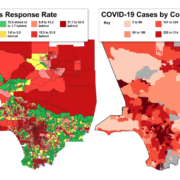
Parts of L.A. Hit Hardest by COVID-19 Also Among Those Where Census Response Lags 2010
The Lens: HIV Prevalence and COVID-19 Vulnerabilities
Census response in poor and minority neighborhoods is undermined by coronavirus
Los Angeles Neighborhoods and COVID-19 Medical Vulnerability Indicators: A Local Data Model for Equity in Public Health Decision-Making
Assessing Vulnerability Indicators and Race/Ethnicity
The COVID-19 Pandemic Housing Crisis: Identifying Owner-Vulnerable Neighborhoods in California
KEEPING THE LIGHTS AND WATER ON: COVID-19 AND UTILITY DEBT IN LOS ANGELES’ COMMUNITIES OF COLOR Keeping the Lights and Water On: COVID-19 and Utility Debt in Los Angeles’ Communities of Color 
0 replies

Leave a Reply

Want to join the discussion?
Feel free to contribute!

Leave a Reply Cancel reply

Your email address will not be published. Required fields are marked *

Pages

  • About
  • Bulldozing Asian Communities: Freeway Construction and Urban Renewal in Stockton
  • CA COVID-19 Medical Vulnerability
  • CA COVID-19 Owner Vulnerability
  • CA COVID-19 Renter Vulnerability
  • CA Transportation Disparities Mapping Tool
  • California Maps
  • Contact
  • COVID Publications
  • COVID-19 Equity Research Initiative
  • Current Projects
  • Director Paul M. Ong
  • Home
  • Immigration
  • LA Wildfires
  • Los Angeles County COVID-19 Medical Vulnerability
  • Los Angeles Vulnerability
  • Maps
  • News
  • Publications
  • Sitemap
  • South LA Decides: Children Data and Mapping Portal
  • Team
  • The Lens 2.0: HIV Prevalence and COVID-19 Vulnerabilities

Categories

  • Events
  • LA Wildfires Data Briefs
  • News
  • Ong
  • Publications
  • Uncategorized

Archive

  • April 2026
  • September 2025
  • July 2025
  • March 2025
  • February 2025
  • January 2025
  • September 2024
  • December 2023
  • November 2023
  • September 2023
  • February 2023
  • May 2022
  • April 2022
  • March 2022
  • February 2022
  • January 2022
  • December 2021
  • November 2021
  • October 2021
  • September 2021
  • August 2021
  • July 2021
  • June 2021
  • May 2021
  • April 2021
  • March 2021
  • February 2021
  • January 2021
  • December 2020
  • November 2020
  • October 2020
  • September 2020
  • August 2020
  • July 2020
  • June 2020
  • May 2020
  • April 2020
  • March 2020
  • December 2019
  • October 2019
  • June 2019
  • May 2019
  • February 2019
  • July 2018
  • June 2018
  • March 2018
  • February 2018
© Copyright - UCLA Center for Neighborhood Knowledge - Login - Enfold WordPress Theme by Kriesi
Link to: Census response in poor and minority neighborhoods is undermined by coronavirus Link to: Census response in poor and minority neighborhoods is undermined by coronavirus Census response in poor and minority neighborhoods is undermined by coronav... Link to: This is what could happen if the 2020 census fails to count everyone in the US Link to: This is what could happen if the 2020 census fails to count everyone in the US This is what could happen if the 2020 census fails to count everyone in the...
Scroll to top Scroll to top Scroll to top