• Link to X
  • Link to Facebook
  • Link to Youtube
  • Link to Mail
UCLA Center for Neighborhood Knowledge
  • Home
  • About
    • Team
    • Contact
  • News
  • Maps
    • California COVID-19 Maps
      • CA COVID-19 Medical Vulnerability
      • CA COVID-19 Owner Vulnerability
      • CA COVID-19 Renter Vulnerability
    • Los Angeles COVID-19 Maps
      • Los Angeles Vulnerability
      • Los Angeles County COVID-19 Medical Vulnerability
    • CA Transportation Disparities Mapping Tool
    • South LA Decides: Children Data and Mapping Portal
    • Lens: HIV Prevalence and COVID-19 Vulnerabilities
      • Lens 1.0: HIV Prevalence and COVID-19 Vulnerabilities
      • Lens 2.0: HIV Prevalence and COVID-19 Vulnerabilities
    • Bulldozing Asian Communities: Freeway Construction and Urban Renewal in Stockton
  • Research
    • Current Projects
    • COVID-19
      • COVID Publications
    • Publications
  • Immigration
  • LA Wildfires
  • Menu Menu
Blog - Latest News

UCLA Economic Letter for September 2020

September 28, 2020/0 Comments/in News, Publications/by CNK Staff

The UCLA Economic Letter is the monthly communication of the UCLA Anderson Forecast and the UCLA Ziman Center for Real Estate. The Letter, sponsored by the Ziman Center’s UCLA Rosalinde and Arthur Gilbert Program in Real Estate, Finance and Urban Economics, provides new insights into the major economic and real estate concerns of the day in a quickly digestible format. It draws upon original research, policy analysis and forecasts produced by UCLA academics and Forecast economists to address the most pressing issues confronting us all. As the premier public university, the University of California serves society as a center of higher learning and strives to provide long-term societal benefits through the discovery and transmission of advanced knowledge. The UCLA Economic Letter series seeks to support those goals.

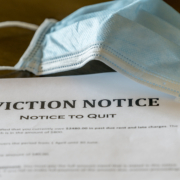
In this September 2020 letter, researchers from the UCLA Center for Neighborhood Knowledge, Karna Wong, Paul M. Ong, and Silvia R. Gonzalez, find that about 5 million – or 8% of American homeowners – were unable to pay their mortgage on time, April to July 2020. In addition, under the COVID-19 crisis, compared with non-Hispanic whites, Black and Hispanic (for Latinx) individuals had two to three times higher odds of experiencing housing hardships.

A link to the complete study can be found here >>> Systemic Racial Inequality and the COVID-19 Homeowner Crisis

Tags: covid19, homelessness, housing, inequality, neighborhoods
Share this entry
  • Share on Facebook
  • Share on X
  • Share on LinkedIn
  • Share by Mail
https://knowledge.luskin.ucla.edu/wp-content/uploads/2020/09/image-5.jpeg 465 759 CNK Staff https://knowledge.luskin.ucla.edu/wp-content/uploads/2020/04/Uxd_Blk_CNK_Luskin_E.png CNK Staff2020-09-28 10:09:422020-10-28 01:20:46UCLA Economic Letter for September 2020
You might also like
Photo attributed to Kevitivity. Incorporated here under a Creative Commons Attribution 2.0 Generic License. No endorsement by licensor implied. Vulnerability Indicators and At-Risk Smaller Populations in California and Los Angeles: American Indians, Pacific Islanders, and Select Asian Ethnic Groups
Assessing Vulnerability Indicators and Race/Ethnicity
Lost Time in Census Count
Jobless During a Global Pandemic
Reliable, accurate and complete count for 2020 Census is at risk
At least 700 Oaklanders signed up to help escort older Asian Americans in the community to keep them safe after a slew of harassment around the Bay Area. // Courtesy of Compassion in Oakland Ong Highlights Economic Obstacles Facing Asian Americans
Housing crisis, pandemic reshaping Southern California population article Housing crisis, pandemic reshaping Southern California population
Assessing Vulnerability Indicators and Race/Ethnicity
0 replies

Leave a Reply

Want to join the discussion?
Feel free to contribute!

Leave a Reply Cancel reply

Your email address will not be published. Required fields are marked *

Pages

  • About
  • Bulldozing Asian Communities: Freeway Construction and Urban Renewal in Stockton
  • CA COVID-19 Medical Vulnerability
  • CA COVID-19 Owner Vulnerability
  • CA COVID-19 Renter Vulnerability
  • CA Transportation Disparities Mapping Tool
  • California Maps
  • Contact
  • COVID Publications
  • COVID-19 Equity Research Initiative
  • Current Projects
  • Director Paul M. Ong
  • Home
  • Immigration
  • LA Wildfires
  • Los Angeles County COVID-19 Medical Vulnerability
  • Los Angeles Vulnerability
  • Maps
  • News
  • Publications
  • Sitemap
  • South LA Decides: Children Data and Mapping Portal
  • Team
  • The Lens 2.0: HIV Prevalence and COVID-19 Vulnerabilities

Categories

  • Events
  • LA Wildfires Data Briefs
  • News
  • Ong
  • Publications
  • Uncategorized

Archive

  • April 2026
  • September 2025
  • July 2025
  • March 2025
  • February 2025
  • January 2025
  • September 2024
  • December 2023
  • November 2023
  • September 2023
  • February 2023
  • May 2022
  • April 2022
  • March 2022
  • February 2022
  • January 2022
  • December 2021
  • November 2021
  • October 2021
  • September 2021
  • August 2021
  • July 2021
  • June 2021
  • May 2021
  • April 2021
  • March 2021
  • February 2021
  • January 2021
  • December 2020
  • November 2020
  • October 2020
  • September 2020
  • August 2020
  • July 2020
  • June 2020
  • May 2020
  • April 2020
  • March 2020
  • December 2019
  • October 2019
  • June 2019
  • May 2019
  • February 2019
  • July 2018
  • June 2018
  • March 2018
  • February 2018
© Copyright - UCLA Center for Neighborhood Knowledge - Login - Enfold WordPress Theme by Kriesi
Link to: Andrew Yang: Helping Biden win could be Asian American ‘political awakening’ Link to: Andrew Yang: Helping Biden win could be Asian American ‘political awakening’ Andrew Yang: Helping Biden win could be Asian American ‘political awa... Link to: ‘Overlooked’: Asian American Jobless Rate Surges But Few Take Notice Link to: ‘Overlooked’: Asian American Jobless Rate Surges But Few Take Notice ‘Overlooked’: Asian American Jobless Rate Surges But Few Take N...
Scroll to top Scroll to top Scroll to top