• Link to X
  • Link to Facebook
  • Link to Youtube
  • Link to Mail
UCLA Center for Neighborhood Knowledge
  • Home
  • About
    • Team
    • Contact
  • News
  • Maps
    • California COVID-19 Maps
      • CA COVID-19 Medical Vulnerability
      • CA COVID-19 Owner Vulnerability
      • CA COVID-19 Renter Vulnerability
    • Los Angeles COVID-19 Maps
      • Los Angeles Vulnerability
      • Los Angeles County COVID-19 Medical Vulnerability
    • CA Transportation Disparities Mapping Tool
    • South LA Decides: Children Data and Mapping Portal
    • Lens: HIV Prevalence and COVID-19 Vulnerabilities
      • Lens 1.0: HIV Prevalence and COVID-19 Vulnerabilities
      • Lens 2.0: HIV Prevalence and COVID-19 Vulnerabilities
    • Bulldozing Asian Communities: Freeway Construction and Urban Renewal in Stockton
  • Research
    • Current Projects
    • COVID-19
      • COVID Publications
    • Publications
  • Immigration
  • LA Wildfires
  • Menu Menu
Blog - Latest News
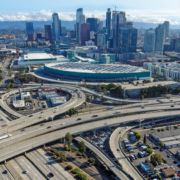
Photo attributed to Kevitivity. Incorporated here under a Creative Commons Attribution 2.0 Generic License. No endorsement by licensor implied.

Vulnerability Indicators and At-Risk Smaller Populations in California and Los Angeles: American Indians, Pacific Islanders, and Select Asian Ethnic Groups
February 8, 2021/0 Comments/in Publications/by CNK Staff

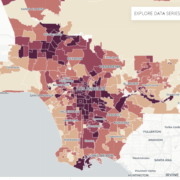
Place-based vulnerability indices are valuable analytical tools that policy makers could use to prioritize the most-at-risk neighborhoods for interventions, including the distribution of COVID-19 vaccines. The indicators, nonetheless, may not be appropriate for many at-risk populations, particularly smaller groups that tend to be less geographically concentrated.

To better understand the limitations of four vulnerability indicators, out new brief assesses their relative ability to include American Indians, Pacific Islanders and select Asian American ethnic subgroups (Cambodians, Filipinos and Koreans). These groups have factors that potentially place them at greater risk from the pandemic because of their jobs, low socioeconomic status and poor living conditions.  Despite these heightened risks, many members of these groups do not reside in neighborhoods designated as being highly vulnerable places by the indicators. The indicators perform relatively better for American Indians and Cambodians.

“It would be great to pinpoint for state and local policymakers where the pandemic relief and assistance should go to help these vulnerable populations,” said Paul Ong, director of the UCLA Center for Neighborhood Knowledge (CNK) and co-lead author of the study. ”Unfortunately, it’s not that easy, because some groups are a hidden diaspora and not tied to a geographic place.” The authors call for greater data disaggregation and the development of new analytical tools that are more appropriate for smaller racial and ethnic populations.

The research was jointly supported by CNK, UCLA Center for Health Policy Research, and Ong & Associates, and was built on earlier efforts co-sponsored by UCLA BRITE Center for Science, Research and Policy.

Access the full report here >>> Vulnerability Indicators and At-Risk Smaller Populations in California and Los Angeles: American Indians, Pacific Islanders, and Select Asian Ethnic Groups
Tags: COVID Publication, covid19, health, health policy, inequality, minority, public health, vulnerability index
Share this entry
  • Share on Facebook
  • Share on X
  • Share on LinkedIn
  • Share by Mail
https://knowledge.luskin.ucla.edu/wp-content/uploads/2021/02/image-1.png 478 800 CNK Staff https://knowledge.luskin.ucla.edu/wp-content/uploads/2020/04/Uxd_Blk_CNK_Luskin_E.png CNK Staff2021-02-08 05:00:502021-02-06 18:31:31Vulnerability Indicators and At-Risk Smaller Populations in California and Los Angeles: American Indians, Pacific Islanders, and Select Asian Ethnic Groups
You might also like
Los Angeles Neighborhoods and COVID-19 Medical Vulnerability Indicators: A Local Data Model for Equity in Public Health Decision-Making
Pandemic Perpetuates Economic Inequality, Ong Finds
Majority white areas got more PPP business loan money than Latino areas, UCLA study says
SoCal Gas Brief Cover Image Keeping the Stove On: COVID-19 and Utility Debt
Ong’s Research on the Asian American Experience Highlighted
Left Behind During a Global Pandemic
This is what could happen if the 2020 census fails to count everyone in the US
Black and Brown Neighborhoods Lack Resources to Shelter-in-Place During COVID19
0 replies

Leave a Reply

Want to join the discussion?
Feel free to contribute!

Leave a Reply Cancel reply

Your email address will not be published. Required fields are marked *

Pages

  • About
  • Bulldozing Asian Communities: Freeway Construction and Urban Renewal in Stockton
  • CA COVID-19 Medical Vulnerability
  • CA COVID-19 Owner Vulnerability
  • CA COVID-19 Renter Vulnerability
  • CA Transportation Disparities Mapping Tool
  • California Maps
  • Contact
  • COVID Publications
  • COVID-19 Equity Research Initiative
  • Current Projects
  • Director Paul M. Ong
  • Home
  • Immigration
  • LA Wildfires
  • Los Angeles County COVID-19 Medical Vulnerability
  • Los Angeles Vulnerability
  • Maps
  • News
  • Publications
  • Sitemap
  • South LA Decides: Children Data and Mapping Portal
  • Team
  • The Lens 2.0: HIV Prevalence and COVID-19 Vulnerabilities

Categories

  • Events
  • LA Wildfires Data Briefs
  • News
  • Ong
  • Publications
  • Uncategorized

Archive

  • April 2026
  • September 2025
  • July 2025
  • March 2025
  • February 2025
  • January 2025
  • September 2024
  • December 2023
  • November 2023
  • September 2023
  • February 2023
  • May 2022
  • April 2022
  • March 2022
  • February 2022
  • January 2022
  • December 2021
  • November 2021
  • October 2021
  • September 2021
  • August 2021
  • July 2021
  • June 2021
  • May 2021
  • April 2021
  • March 2021
  • February 2021
  • January 2021
  • December 2020
  • November 2020
  • October 2020
  • September 2020
  • August 2020
  • July 2020
  • June 2020
  • May 2020
  • April 2020
  • March 2020
  • December 2019
  • October 2019
  • June 2019
  • May 2019
  • February 2019
  • July 2018
  • June 2018
  • March 2018
  • February 2018
© Copyright - UCLA Center for Neighborhood Knowledge - Login - Enfold WordPress Theme by Kriesi
Link to: How Biden can undo the divisions Trump deepened in immigrant communities Link to: How Biden can undo the divisions Trump deepened in immigrant communities How Biden can undo the divisions Trump deepened in immigrant communitiesCreator: Pacific Press | Credit: LightRocket via Getty Images Link to: On eve of Lunar New Year, COVID-19 pushes Chinatown businesses to the brink Link to: On eve of Lunar New Year, COVID-19 pushes Chinatown businesses to the brink On eve of Lunar New Year, COVID-19 pushes Chinatown businesses to the brink
Scroll to top Scroll to top Scroll to top