• Link to X
  • Link to Facebook
  • Link to Youtube
  • Link to Mail
UCLA Center for Neighborhood Knowledge
  • Home
  • About
    • Team
    • Contact
  • News
  • Maps
    • California COVID-19 Maps
      • CA COVID-19 Medical Vulnerability
      • CA COVID-19 Owner Vulnerability
      • CA COVID-19 Renter Vulnerability
    • Los Angeles COVID-19 Maps
      • Los Angeles Vulnerability
      • Los Angeles County COVID-19 Medical Vulnerability
    • CA Transportation Disparities Mapping Tool
    • South LA Decides: Children Data and Mapping Portal
    • Lens: HIV Prevalence and COVID-19 Vulnerabilities
      • Lens 1.0: HIV Prevalence and COVID-19 Vulnerabilities
      • Lens 2.0: HIV Prevalence and COVID-19 Vulnerabilities
    • Bulldozing Asian Communities: Freeway Construction and Urban Renewal in Stockton
  • Research
    • Current Projects
    • COVID-19
      • COVID Publications
    • Publications
  • Immigration
  • LA Wildfires
  • Menu Menu
Blog - Latest News

Census count is ending early. What that means for California and other states with many immigrants

October 16, 2020/0 Comments/in News, Ong/by CNK Staff

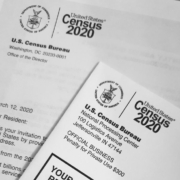
The Census ends in the early hours of Friday morning — midnight Hawaii time. The Supreme Court earlier this week allowed the Trump administration to cut the Census count short by about two weeks. The justices gave no explanation for the decision. Justice Sonya Sotomayor dissented.

It’s a big win for the Trump administration. It argued the deadline needed to be moved up to give Census officials enough time to process the data before the end of the year.

New York Times magazine writer Emily Bazelon says that time makes a huge difference for representation for the next 10 years.

“It’s clear that President Trump wants the Census results … by the end of the year so he can issue the numbers for apportionment, for redistricting, before the end of his first term,” she says.

But it’s bad news for civil rights groups and big diverse states like California, who were pushing for more time to make sure everyone was counted.

“If you take the numbers as is, you take the flaws that’s in the count. And I suspect it’s going to be much worse now in 2020 than 2010. You’re significantly shifting political power,” says CNK Director Paul Ong. “But it’s also more than that. We use these numbers for economic purposes … and it has long-term implications in terms of who gets what and who gets left out.”

Ong says miscounting how many people live in each neighborhood will affect everything from bus routes to allocating the next housing project to particular communities.

Bazelon says even though the Census ends soon, challenges over the decision are far from over. “The Constitution says that we have to have a Census every 10 years. It doesn’t say we couldn’t do another Census. It is also true in the 1920s, Congress refused to reapportion until 1929 because they didn’t like the Census results. … That does create some kind of precedent for Congress just saying, ‘No, this is not how apportionment is supposed to happen.’”

Featuring our director and former U.S. Census Bureau advisor, Paul Ong, listen to the KCRW radio broadcast discussing this ongoing dilemma with the U.S. Census here >>> Census count is ending early. What that means for California and other states with many immigrants
Tags: census, census2020, neighborhoods
Share this entry
  • Share on Facebook
  • Share on X
  • Share on LinkedIn
  • Share by Mail
https://knowledge.luskin.ucla.edu/wp-content/uploads/2020/10/image-3-e1626544425101.png 500 1460 CNK Staff https://knowledge.luskin.ucla.edu/wp-content/uploads/2020/04/Uxd_Blk_CNK_Luskin_E.png CNK Staff2020-10-16 02:41:222021-07-17 10:53:59Census count is ending early. What that means for California and other states with many immigrants
You might also like
Evaluating 2020 Census Data for L.A. County by Comparing Parcel-Based Housing Counts
In California, It Will Take More than a Parade to Save an Imperiled Census
New Interactive COVID-19 Impacts Maps and Data
Joel Sheldon, owner of Vroman’s Bookstore, worries that his Pasadena store may not make it through the year because of the economic devastation caused by the COVID-19 pandemic. (Myung J. Chun / Los Angeles Times) The Los Angeles we love is dying in 2020. We must fight to save it
Economic Impacts of the COVID-19 Crisis in Orange County
Parts of L.A. Hit Hardest by COVID-19 Also Among Those Where Census Response Lags 2010
Webinar – Confronting COVID-19: The Toll of the Virus on LA’s Most Vulnerable Communities
Impact of coronavirus pandemic on U.S. Census 2020
0 replies

Leave a Reply

Want to join the discussion?
Feel free to contribute!

Leave a Reply Cancel reply

Your email address will not be published. Required fields are marked *

Pages

  • About
  • Bulldozing Asian Communities: Freeway Construction and Urban Renewal in Stockton
  • CA COVID-19 Medical Vulnerability
  • CA COVID-19 Owner Vulnerability
  • CA COVID-19 Renter Vulnerability
  • CA Transportation Disparities Mapping Tool
  • California Maps
  • Contact
  • COVID Publications
  • COVID-19 Equity Research Initiative
  • Current Projects
  • Director Paul M. Ong
  • Home
  • Immigration
  • LA Wildfires
  • Los Angeles County COVID-19 Medical Vulnerability
  • Los Angeles Vulnerability
  • Maps
  • News
  • Publications
  • Sitemap
  • South LA Decides: Children Data and Mapping Portal
  • Team
  • The Lens 2.0: HIV Prevalence and COVID-19 Vulnerabilities

Categories

  • Events
  • LA Wildfires Data Briefs
  • News
  • Ong
  • Publications
  • Uncategorized

Archive

  • April 2026
  • September 2025
  • July 2025
  • March 2025
  • February 2025
  • January 2025
  • September 2024
  • December 2023
  • November 2023
  • September 2023
  • February 2023
  • May 2022
  • April 2022
  • March 2022
  • February 2022
  • January 2022
  • December 2021
  • November 2021
  • October 2021
  • September 2021
  • August 2021
  • July 2021
  • June 2021
  • May 2021
  • April 2021
  • March 2021
  • February 2021
  • January 2021
  • December 2020
  • November 2020
  • October 2020
  • September 2020
  • August 2020
  • July 2020
  • June 2020
  • May 2020
  • April 2020
  • March 2020
  • December 2019
  • October 2019
  • June 2019
  • May 2019
  • February 2019
  • July 2018
  • June 2018
  • March 2018
  • February 2018
© Copyright - UCLA Center for Neighborhood Knowledge - Login - Enfold WordPress Theme by Kriesi
Link to: The Los Angeles we love is dying in 2020. We must fight to save it Link to: The Los Angeles we love is dying in 2020. We must fight to save it The Los Angeles we love is dying in 2020. We must fight to save itJoel Sheldon, owner of Vroman’s Bookstore, worries that his Pasadena store may not make it through the year because of the economic devastation caused by the COVID-19 pandemic. (Myung J. Chun / Los Angeles Times) Link to: How COVID-19 Continues to Affect Small Businesses in Los Angeles Link to: How COVID-19 Continues to Affect Small Businesses in Los Angeles How COVID-19 Continues to Affect Small Businesses in Los Angeles
Scroll to top Scroll to top Scroll to top