• Link to X
  • Link to Facebook
  • Link to Youtube
  • Link to Mail
UCLA Center for Neighborhood Knowledge
  • Home
  • About
    • Team
    • Contact
  • News
  • Maps
    • California COVID-19 Maps
      • CA COVID-19 Medical Vulnerability
      • CA COVID-19 Owner Vulnerability
      • CA COVID-19 Renter Vulnerability
    • Los Angeles COVID-19 Maps
      • Los Angeles Vulnerability
      • Los Angeles County COVID-19 Medical Vulnerability
    • CA Transportation Disparities Mapping Tool
    • South LA Decides: Children Data and Mapping Portal
    • Lens: HIV Prevalence and COVID-19 Vulnerabilities
      • Lens 1.0: HIV Prevalence and COVID-19 Vulnerabilities
      • Lens 2.0: HIV Prevalence and COVID-19 Vulnerabilities
    • Bulldozing Asian Communities: Freeway Construction and Urban Renewal in Stockton
  • Research
    • Current Projects
    • COVID-19
      • COVID Publications
    • Publications
  • Immigration
  • LA Wildfires
  • Menu Menu
Blog - Latest News

Asian Americans voted for Biden 63% to 31%, but the reality is more complex

November 13, 2020/0 Comments/in News, Ong/by CNK Staff

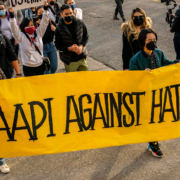
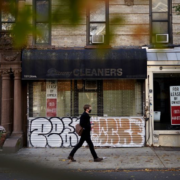
Paul Ong, director of the Center for Neighborhood Knowledge at UCLA Luskin, was featured in an NBC article discussing voting trends among Asian Americans. Early exit polls indicated that Asian American voters heavily favored Democratic presidential candidate Joe Biden over President Donald Trump. While Biden performed well, the data suggests that Trump’s level of support among  Asian Americans did not decline. During the pandemic, anti-Asian sentiment across the country contributed to hate incidents as well as an increase in Asian American unemployment and business closings, Ong said. He expected Trump’s use of xenophobic and discriminatory language, such as “kung flu” and “China virus,” to decrease support for the president among Asian Americans. Instead, he noted that “changes have only happened marginally, and not a massive shift.” Ong concluded that “the racialized political divide has hardened, and we face a difficult next four years.”

Read the full article here >>> Asian Americans voted for Biden 63% to 31%, but the reality is more complex
Tags: 2020 elections, Asian Americans, racism, unemployment, vote
Share this entry
  • Share on Facebook
  • Share on X
  • Share on LinkedIn
  • Share by Mail
https://knowledge.luskin.ucla.edu/wp-content/uploads/2020/11/image-1.png 687 1030 CNK Staff https://knowledge.luskin.ucla.edu/wp-content/uploads/2020/04/Uxd_Blk_CNK_Luskin_E.png CNK Staff2020-11-13 20:37:062020-12-14 17:54:35Asian Americans voted for Biden 63% to 31%, but the reality is more complex
You might also like
Ong’s Research on the Asian American Experience Highlighted
Asian American Businesses: Identifying Gaps and Supporting Recovery 2021
Jobless During a Global Pandemic
Inequality and COVID-19 Job Displacement
White House adds new initiative for Asian American, Pacific Islander and Native Hawaiian visibility
(Scott Suchman for The Washington Post/food styling by Lisa Cherkasky for The Washington Post) Comfort and Connection and AAPI Employment Disruptions
President Biden announced changes Monday to the Paycheck Protection Program aimed at helping smaller businesses owned by women and people of color to qualify for federal loans due to the economic impact that has been caused by the COVID-19 pandemic. Alex Wong/Getty Images New PPP plan aims to level playing field for smallest businesses
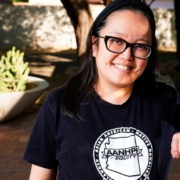
Jennifer Chau, director of the Arizona Asian American Native Hawaiian and Pacific Islander For Equity Coalition, at her office Friday, April 8, 2022, in Tempe, Ariz. (AP Photo/Ross D. Franklin) ROSS D. FRANKLIN AP Asian population overcount masks community nuances
0 replies

Leave a Reply

Want to join the discussion?
Feel free to contribute!

Leave a Reply Cancel reply

Your email address will not be published. Required fields are marked *

Pages

  • About
  • Bulldozing Asian Communities: Freeway Construction and Urban Renewal in Stockton
  • CA COVID-19 Medical Vulnerability
  • CA COVID-19 Owner Vulnerability
  • CA COVID-19 Renter Vulnerability
  • CA Transportation Disparities Mapping Tool
  • California Maps
  • Contact
  • COVID Publications
  • COVID-19 Equity Research Initiative
  • Current Projects
  • Director Paul M. Ong
  • Home
  • Immigration
  • LA Wildfires
  • Los Angeles County COVID-19 Medical Vulnerability
  • Los Angeles Vulnerability
  • Maps
  • News
  • Publications
  • Sitemap
  • South LA Decides: Children Data and Mapping Portal
  • Team
  • The Lens 2.0: HIV Prevalence and COVID-19 Vulnerabilities

Categories

  • Events
  • LA Wildfires Data Briefs
  • News
  • Ong
  • Publications
  • Uncategorized

Archive

  • April 2026
  • September 2025
  • July 2025
  • March 2025
  • February 2025
  • January 2025
  • September 2024
  • December 2023
  • November 2023
  • September 2023
  • February 2023
  • May 2022
  • April 2022
  • March 2022
  • February 2022
  • January 2022
  • December 2021
  • November 2021
  • October 2021
  • September 2021
  • August 2021
  • July 2021
  • June 2021
  • May 2021
  • April 2021
  • March 2021
  • February 2021
  • January 2021
  • December 2020
  • November 2020
  • October 2020
  • September 2020
  • August 2020
  • July 2020
  • June 2020
  • May 2020
  • April 2020
  • March 2020
  • December 2019
  • October 2019
  • June 2019
  • May 2019
  • February 2019
  • July 2018
  • June 2018
  • March 2018
  • February 2018
© Copyright - UCLA Center for Neighborhood Knowledge - Login - Enfold WordPress Theme by Kriesi
Link to: Inequality and COVID-19 Food Insecurity Link to: Inequality and COVID-19 Food Insecurity Inequality and COVID-19 Food Insecurity Link to: Los Angeles Neighborhoods and COVID-19 Medical Vulnerability Indicators: A Local Data Model for Equity in Public Health Decision-Making Link to: Los Angeles Neighborhoods and COVID-19 Medical Vulnerability Indicators: A Local Data Model for Equity in Public Health Decision-Making Los Angeles Neighborhoods and COVID-19 Medical Vulnerability Indicators: A Local...
Scroll to top Scroll to top Scroll to top