• Link to X
  • Link to Facebook
  • Link to Youtube
  • Link to Mail
UCLA Center for Neighborhood Knowledge
  • Home
  • About
    • Team
    • Contact
  • News
  • Maps
    • California COVID-19 Maps
      • CA COVID-19 Medical Vulnerability
      • CA COVID-19 Owner Vulnerability
      • CA COVID-19 Renter Vulnerability
    • Los Angeles COVID-19 Maps
      • Los Angeles Vulnerability
      • Los Angeles County COVID-19 Medical Vulnerability
    • CA Transportation Disparities Mapping Tool
    • South LA Decides: Children Data and Mapping Portal
    • Lens: HIV Prevalence and COVID-19 Vulnerabilities
      • Lens 1.0: HIV Prevalence and COVID-19 Vulnerabilities
      • Lens 2.0: HIV Prevalence and COVID-19 Vulnerabilities
    • Bulldozing Asian Communities: Freeway Construction and Urban Renewal in Stockton
  • Research
    • Current Projects
    • COVID-19
      • COVID Publications
    • Publications
  • Immigration
  • LA Wildfires
  • Menu Menu
Blog - Latest News

CNK Research Finds Census Inequity in L.A. County

August 18, 2021/0 Comments/in News, Ong, Publications/by CNK Staff

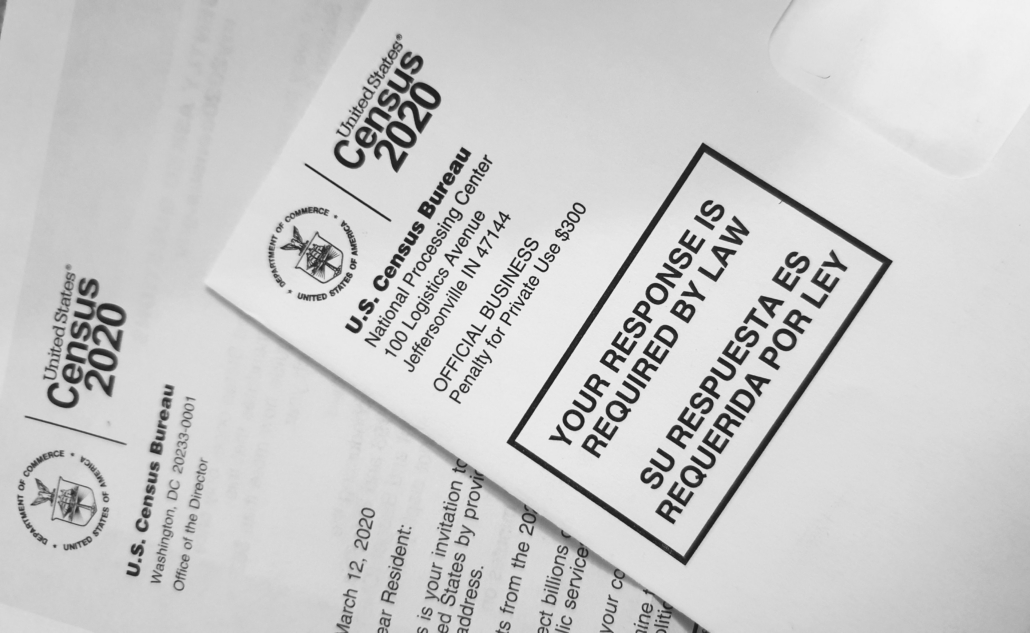
The Census Bureau conducts an enumeration of the population every decade and compiles the information to assist local officials in the redrawing of political boundaries in response to population changes to ensure that electoral districts are equal in population size. While the goal for every decennial census is a complete and accurate count, it has never been perfect, both missing some individuals and double counting others. 

CNK director Paul Ong and Jonathan Ong of Ong and Associates, a public-interest consulting firm, combed through the data from the redistricting census data released Aug. 12 by the U.S. Census Bureau. They compared the information to earlier population estimates based on the American Community Survey to determine whether and where the 2020 enumeration appears to undercount or overcount the population within each neighborhood in Los Angeles County. 

“The results are, unfortunately, consistent with our worst fear that the 2020 enumeration faced numerous potentially insurmountable barriers to a complete and accurate count,” Ong said.

He explained that a key difference between the American Community Survey and the 2020 census is that the COVID-19 pandemic severely impacted data collection for the 2020 enumeration. Previous research has shown that the pandemic’s disruption was particularly pronounced in disadvantaged neighborhoods. The results indicate that the 2020 census suffers from what is known as a “differential undercount,” where some populations are disproportionately missed by the enumeration. As a result, the scope of ethnic diversity and demographic change in cities like Los Angeles can be significantly underestimated, Ong noted.

The factsheet summarizes the findings from the comparison of population counts for LA County from the 2020 data for political redistricting (P.L. 94-171 Redistricting Data or PL94) and the 2015-19 American Community Survey (ACS). Differential undercount is deeply embedded in and shaped by existing structures of inequality. It is, therefore, not surprising that historically low-income persons and people of color are disproportionately missed by the enumeration, and thus disproportionately undercounted.

Access the factsheet at: Potential Differential Undercount in 2020 Census Redistricting Data: Los Angeles County, California

Tags: census, census2020, covid19, inequality, los angeles, neighborhoods
Share this entry
  • Share on Facebook
  • Share on X
  • Share on LinkedIn
  • Share by Mail
https://knowledge.luskin.ucla.edu/wp-content/uploads/2021/08/enayet-raheem-0UxQZNoLnlk-unsplash-scaled.jpg 1573 2560 CNK Staff https://knowledge.luskin.ucla.edu/wp-content/uploads/2020/04/Uxd_Blk_CNK_Luskin_E.png CNK Staff2021-08-18 06:00:092021-08-31 01:02:22CNK Research Finds Census Inequity in L.A. County
You might also like
Asian American Businesses: Identifying Gaps and Supporting Recovery 2021
Ethan Roman and his father, Eliazar Cabrera, load boxes into a U-Haul truck as they prepare to move from Los Angeles.(Jason Armond / Los Angeles Times) Big population drops in Los Angeles, San Francisco transforming urban California
Mario Ramírez Garcia, 10, listen as his teacher addresses the class during distance learning in the bedroom he shares with his sister on April 23, 2021. According to their father, the internet connection at their Oakland home cuts out about twice a week, which is especially frustrating to the kids when they are taking tests. Photo by Anne Wernikoff, CalMatters Analysis shows why millions of California students lack broadband
The Lens: HIV Prevalence and COVID-19 Vulnerabilities
Hundreds of volunteers signed up to accompany older Asian Americans in Oakland's Chinatown neighborhood to help keep them safe. How to help families of the spa shooting victims and all Asian Americans under attack
Persistent Shortfall and Racial/Class Disparities 2020 Census Self-Response Rate
https://census.lacounty.gov/census/ Los Angeles County 2020 Census Response Rate Falling Behind
Housing crisis, pandemic reshaping Southern California population article Housing crisis, pandemic reshaping Southern California population
0 replies

Leave a Reply

Want to join the discussion?
Feel free to contribute!

Leave a Reply Cancel reply

Your email address will not be published. Required fields are marked *

Pages

  • About
  • Bulldozing Asian Communities: Freeway Construction and Urban Renewal in Stockton
  • CA COVID-19 Medical Vulnerability
  • CA COVID-19 Owner Vulnerability
  • CA COVID-19 Renter Vulnerability
  • CA Transportation Disparities Mapping Tool
  • California Maps
  • Contact
  • COVID Publications
  • COVID-19 Equity Research Initiative
  • Current Projects
  • Director Paul M. Ong
  • Home
  • Immigration
  • LA Wildfires
  • Los Angeles County COVID-19 Medical Vulnerability
  • Los Angeles Vulnerability
  • Maps
  • News
  • Publications
  • Sitemap
  • South LA Decides: Children Data and Mapping Portal
  • Team
  • The Lens 2.0: HIV Prevalence and COVID-19 Vulnerabilities

Categories

  • Events
  • LA Wildfires Data Briefs
  • News
  • Ong
  • Publications
  • Uncategorized

Archive

  • April 2026
  • September 2025
  • July 2025
  • March 2025
  • February 2025
  • January 2025
  • September 2024
  • December 2023
  • November 2023
  • September 2023
  • February 2023
  • May 2022
  • April 2022
  • March 2022
  • February 2022
  • January 2022
  • December 2021
  • November 2021
  • October 2021
  • September 2021
  • August 2021
  • July 2021
  • June 2021
  • May 2021
  • April 2021
  • March 2021
  • February 2021
  • January 2021
  • December 2020
  • November 2020
  • October 2020
  • September 2020
  • August 2020
  • July 2020
  • June 2020
  • May 2020
  • April 2020
  • March 2020
  • December 2019
  • October 2019
  • June 2019
  • May 2019
  • February 2019
  • July 2018
  • June 2018
  • March 2018
  • February 2018
© Copyright - UCLA Center for Neighborhood Knowledge - Login - Enfold WordPress Theme by Kriesi
Link to: The Lens: HIV Prevalence and COVID-19 Vulnerabilities Link to: The Lens: HIV Prevalence and COVID-19 Vulnerabilities The Lens: HIV Prevalence and COVID-19 Vulnerabilities Link to: Latino city in Arizona grew, but census says it shrank Link to: Latino city in Arizona grew, but census says it shrank Latino city in Arizona grew, but census says it shrank
Scroll to top Scroll to top Scroll to top